Engineered Surfaces
What Is Terrazzo? Properties, Uses, Pros and Cons
Terrazzo turns leftover stone chips into a decorative surface. The binder — cement or resin — determines much of how the finished terrazzo performs and is maintained.
Quick answer
Terrazzo is a composite surface made of chips of marble, quartz, glass, or other materials set in a cement or resin binder and then ground smooth. It is durable, highly customizable, and used for floors, walls, and countertops.
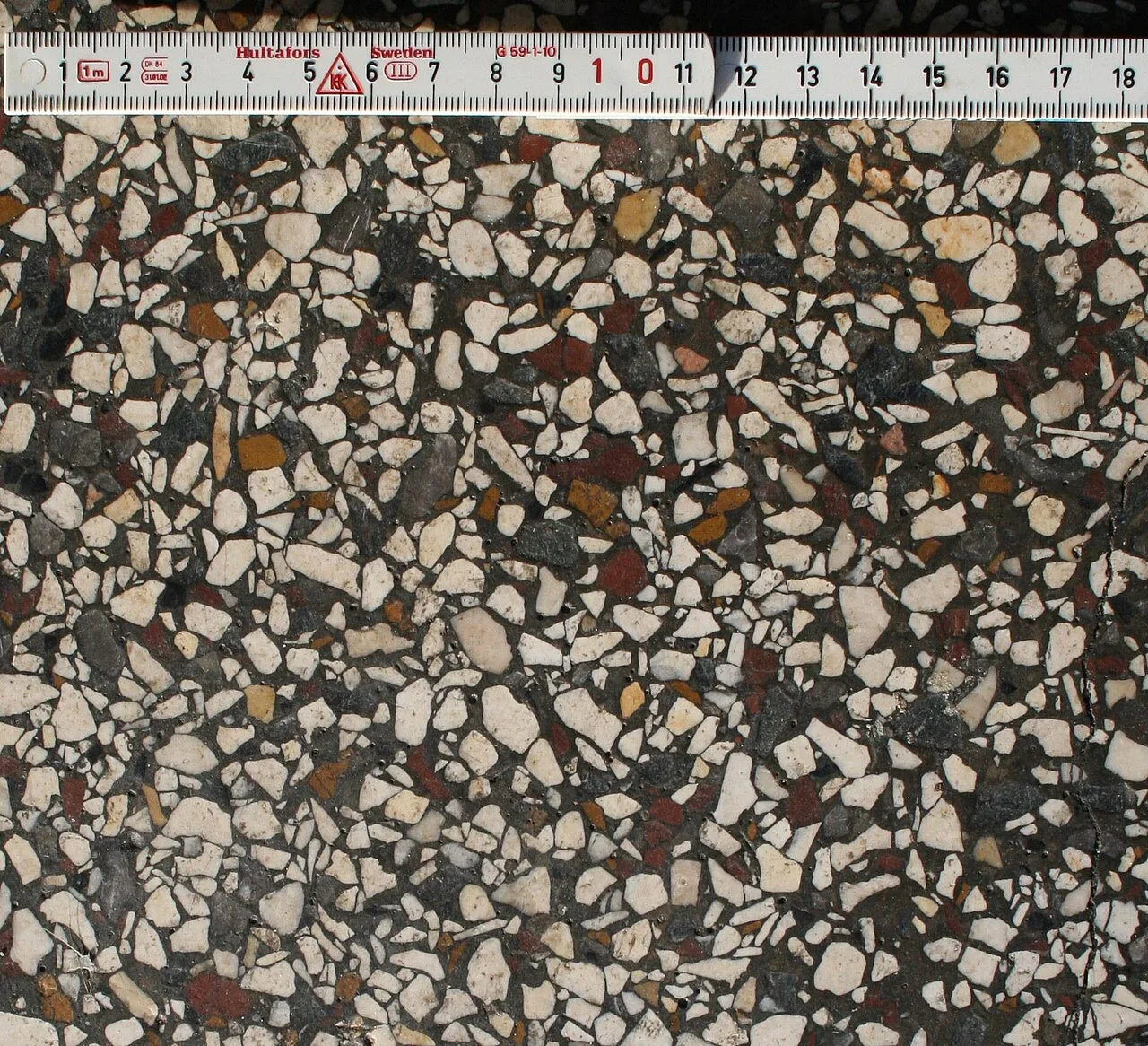
Terrazzo is a composite surface made of chips of marble, quartz, glass, or other materials set in a binder and then ground smooth. It is a manufactured material with a long history, and the choice of binder — cement or resin — shapes how it performs.
What Is It Made From?
Terrazzo combines decorative chips — traditionally marble offcuts, but now also glass, quartz, and metal — with a binder. Cement-based terrazzo uses a cement matrix; resin-based (epoxy) terrazzo uses a polymer binder. The two behave quite differently in practice.
How Is It Manufactured?
The chips are mixed into the binder, poured, and allowed to cure, then the surface is ground and polished to reveal the chips. The grinding-and-polishing step is what turns a rough mixture into the smooth, speckled surface terrazzo is known for.
What Does It Look Like?
Terrazzo's look is defined by its chips — their color, size, and density. It ranges from fine, subtle flecks to bold, large-scale patterns. Because the chip mix is fully customizable, terrazzo offers a level of color control that natural stone cannot.
Where Is It Used?
Terrazzo is used for flooring, wall panels, countertops, stair treads, and furniture. It has been a staple of commercial and institutional buildings for decades and has returned as a popular decorative surface in homes.
Porosity and Maintenance
Cement terrazzo is porous and generally needs sealing; epoxy terrazzo is much less porous and easier to maintain. Polished terrazzo can be slippery when wet, so floor applications often use a more matte finish or added slip resistance. The maintenance routine depends heavily on the binder type.
Advantages
- Highly customizable color and chip patterns.
- Durable and long-wearing, especially epoxy terrazzo.
- Can be poured as large, seamless surfaces.
- A distinctive, enduring aesthetic.
Limitations
- Cement terrazzo needs sealing and more upkeep.
- Can crack if the substrate moves.
- Polished surfaces can be slippery when wet.
- Installation is specialized and can be costly.
Common Misunderstandings
Terrazzo is not a single material — cement and resin terrazzo differ in porosity and care. It is also not a natural stone, even though it contains stone chips. Sealing cement terrazzo reduces staining risk but does not make it maintenance-free or stain-proof.