Natural Stone
What Is Slate? Properties, Uses, Pros and Cons
Slate's cleaved, layered surface gives it a look unlike polished stone. Its natural cleft texture is both a design feature and a maintenance consideration.
Quick answer
Slate is a natural metamorphic rock formed from shale. It splits into thin, flat layers, which makes it useful for flooring, roofing, and tiles, and it is generally dense and low-porosity.
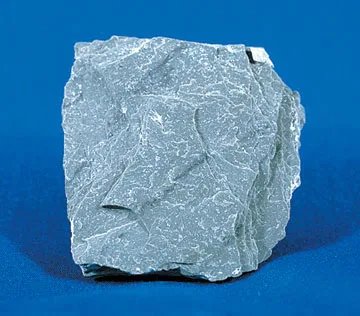
Slate is a natural metamorphic rock formed from shale under relatively low heat and pressure. Its defining feature is slaty cleavage — the ability to split into thin, flat sheets along fine parallel layers.
How Does Slate Form?
Slate begins as shale, a fine-grained sedimentary rock made of compacted clay and silt. Under regional metamorphism, the clay minerals recrystallize and align, which lets the rock split cleanly along planes. This is what allows slate to be quarried as flat sheets rather than sawn like granite.
What Does Slate Look Like?
Slate comes in greys, blacks, greens, purples, and rust tones. Its surface can be smooth or naturally cleft, depending on how it is processed. The cleft texture — a slightly uneven, layered surface — is part of slate's character and makes it less uniform than polished stone.
Where Is Slate Used?
Slate is used for roofing, flooring, wall cladding, hearths, and outdoor paving. Its natural slip resistance and layered look make it popular for floors and exterior surfaces, while its low porosity has historically made it a favorite for roofing.
Porosity and Sealing
Slate is generally dense and low-porosity compared with many other stones, but the surface finish matters. A cleft or textured surface can hold water in its texture even when the stone itself absorbs little. Sealing is sometimes used on floors to make cleaning easier, but many slates need little or no sealing.
Heat and Scratch Resistance
Slate tolerates heat well and is commonly used around fireplaces. It is softer than granite and can scratch, though its cleft or textured surface tends to hide minor marks better than a polished stone would.
Advantages
- Dense and generally low-porosity.
- Naturally slip-resistant when cleft or textured.
- Distinctive, earthy appearance.
- Handles heat well.
Limitations
- Softer than granite and can scratch or chip.
- Cleft surfaces collect dust and can be harder to clean.
- Limited color range compared with other stones.
- Can flake along its cleavage planes if struck.
Common Misunderstandings
Slate's layered look is a structural feature, not a defect. Its low porosity does not make it completely waterproof — surface texture still affects how water behaves. And slate is not the same as limestone or shale, even though they are related through the rock cycle.