Finishes & Terms
What Does Veining Mean in Stone?
Veining is what gives marble its movement. Those lines are geological records — mineral impurities laid down while the stone formed — and no two slabs repeat the same pattern.
Quick answer
Veining is the wavy, linear pattern in stone formed by mineral impurities and fluids that were present when the rock formed or changed. It is most associated with marble and is a major factor in how slabs are selected and matched.
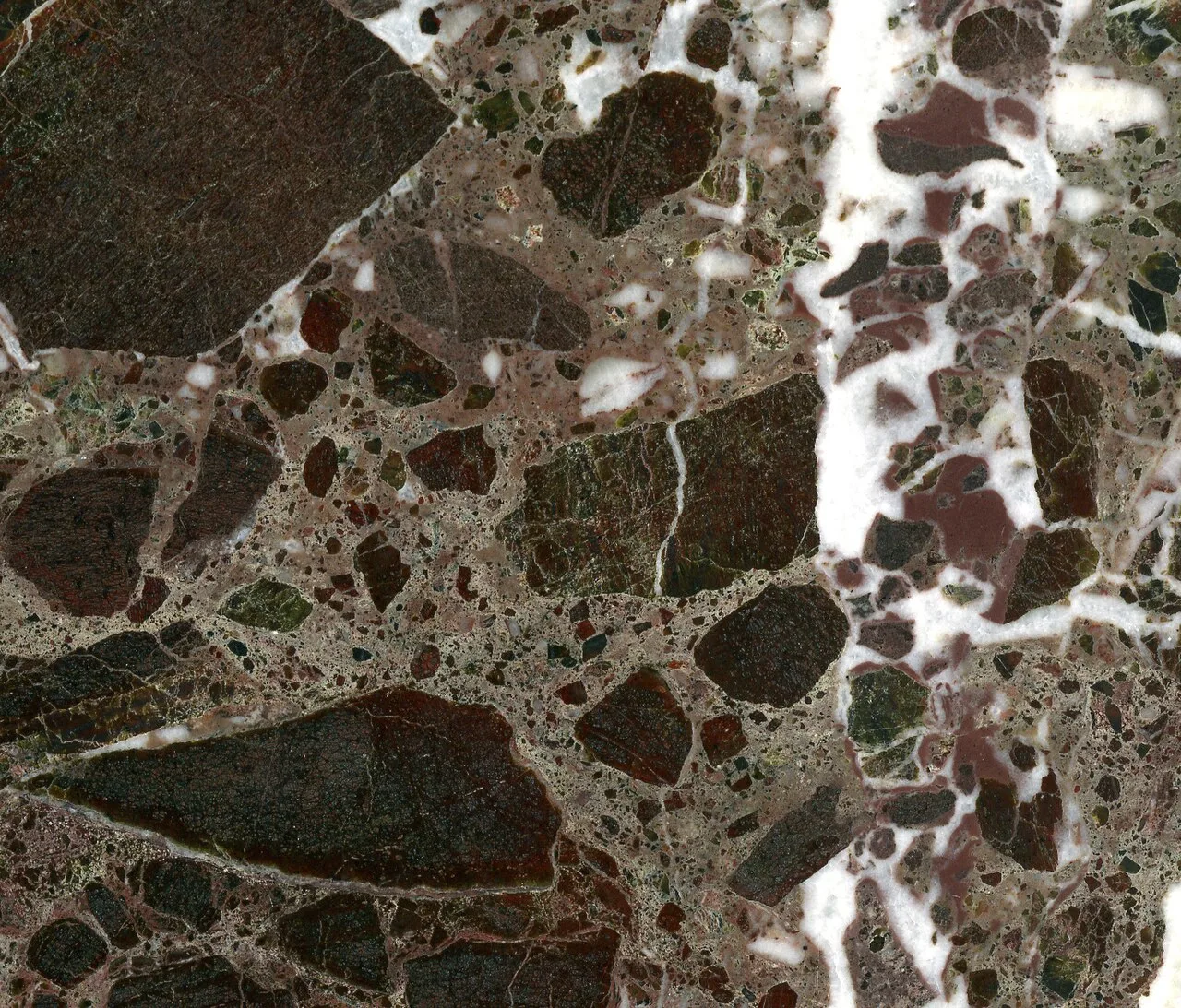
Veining is the wavy, linear pattern in stone formed by mineral impurities and fluids that were present when the rock formed or changed. It is most associated with marble, and it is a major factor in how slabs are selected and matched.
How Veins Form
Veins form when minerals, carried by fluids or present as impurities, are deposited or recrystallized within the stone. In marble, impurities such as clay, iron oxides, and other minerals in the original limestone become the colored bands we call veins. The pattern records the stone's geological history.
Why Vein Patterns Vary
No two slabs vein the same way, because the impurities, pressures, and fluid paths differed in every deposit. Veins can be fine and hairline or bold and sweeping, dark or pale, dense or sparse. This natural variation is exactly why slabs are selected by hand at the slab yard.
How Veining Affects Design
Vein direction and scale shape how a finished space looks. Heavy, dramatic veining reads as a feature; fine, even veining reads as quieter. When multiple slabs are used, matching vein direction across seams — or deliberately mirroring it through bookmatching — changes the result significantly.
Veining vs Cracks
Veins are mineral-filled patterns within the stone and are part of its structure. Cracks are physical separations that can affect strength. Some stones contain natural fissures that are filled during finishing, which can look like veins but behave differently. This is one reason professional fabrication matters.
Veining in Different Stones
Veining is most famous in marble, but it also appears in quartzite, travertine, onyx, and dolomite. In each case, the veins come from the minerals present during formation. A stone with strong veining is not stronger or weaker because of it — the veins are a visual record, not a structural rating.
Common Misunderstandings
Veining is not painted on — it runs through the stone's structure, though the visible pattern on the surface can change as the slab is cut. Heavier veining does not mean higher quality, and a veined stone is not necessarily marble. When matching slabs, what matters is how the vein pattern lines up across the actual pieces you buy.
References & further reading
- Veining in stone — Natural Stone Institute
- Marble — Encyclopaedia Britannica