Comparisons
Travertine vs Limestone: What's the Difference?
Travertine and limestone are close relatives in the calcite family. Their different origins show up most clearly in texture: travertine's pits versus limestone's smooth, even face.
Quick answer
Travertine and limestone are both sedimentary calcium-carbonate stones, but travertine forms around mineral springs and has distinctive holes, while limestone forms in marine settings and is usually more even in appearance.
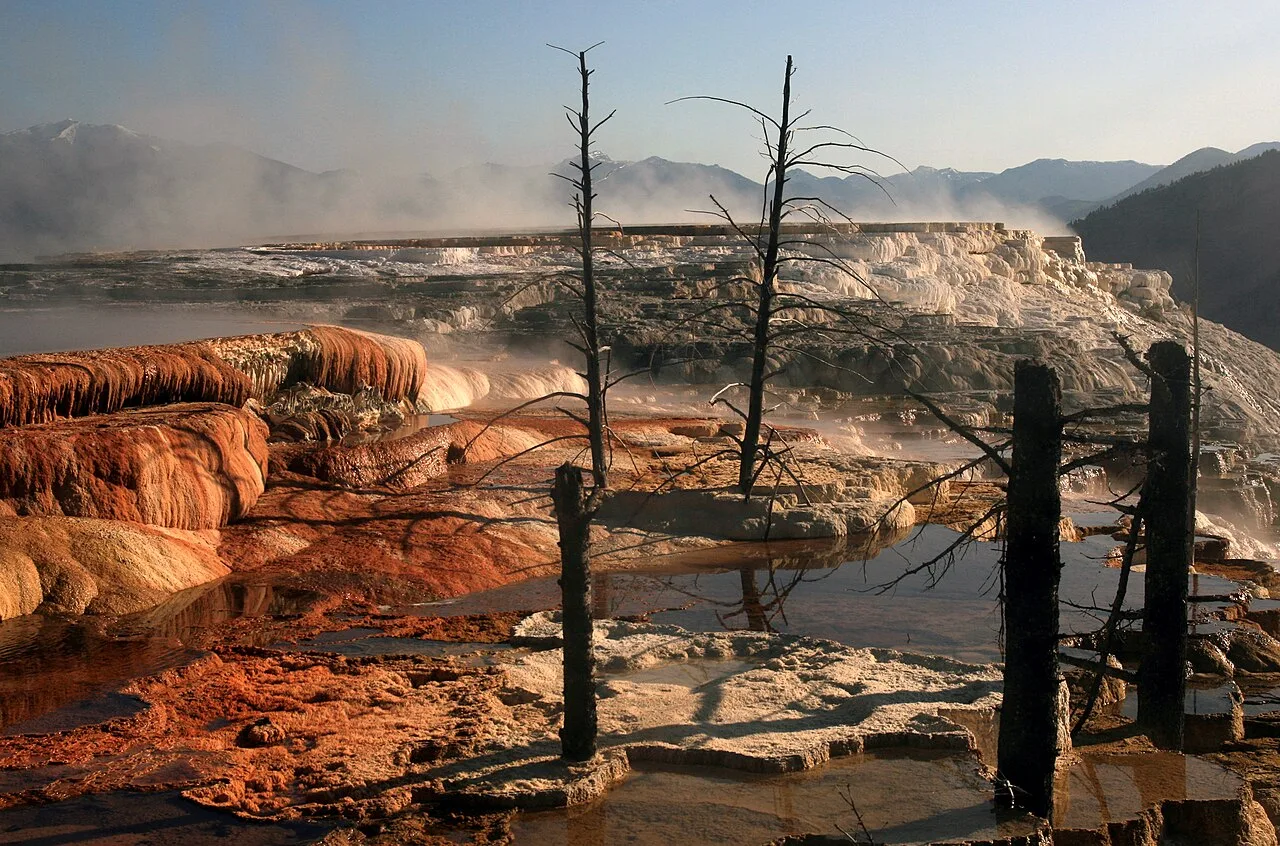
Travertine and limestone are both sedimentary calcium-carbonate stones, but they form in different settings. Travertine forms around mineral springs and has distinctive holes; limestone forms in marine settings and is usually more even in appearance.
| Property | Travertine | Limestone |
|---|---|---|
| Type | Sedimentary | Sedimentary |
| Formed | Around mineral springs | In marine settings |
| Texture | Pits and holes | Even, smooth |
| Color | Warm creams, tans | Muted creams, greys |
| Porosity | High | Varies |
| Sealing | Commonly | Sometimes |
| Heat | Medium | Medium |
| Etching | Etches from acids | Etches from acids |
How They Form
Travertine precipitates from mineral-rich spring water, which leaves the voids that become its signature holes. Limestone accumulates in shallow seas from shells, coral, and lime mud. Both end up as calcium-carbonate stone, but their origins show up in their texture.
Appearance
Travertine is warm-toned — cream, beige, tan, and gold — with visible pits that are usually filled during finishing. Limestone is typically more even and muted, with fewer dramatic features. If you want texture and warmth, travertine offers it; if you want calm uniformity, limestone does.
Porosity and Care
Travertine's holes make it noticeably porous, and it is commonly sealed. Limestone's porosity varies by type, and denser varieties need less sealing. Both are calcium-carbonate stones, so both can etch from acidic liquids, and neither should be treated as acid-resistant.
Which Should You Choose?
Choose travertine if you want warm tones and a textured, old-world character. Choose limestone if you want a calmer, more uniform surface. Both need realistic expectations around porosity and acid sensitivity, and both benefit from sealing where stains are a concern.
References & further reading
- Travertine — Geology.com
- Limestone — Geology.com