Natural Stone
What Is Dolomite Stone? Properties, Uses, Pros and Cons
Dolomite is frequently marketed as a 'harder marble.' It is indeed often harder than classic marble, but it is not immune to the acid etching that affects calcite stones.
Quick answer
Dolomite is a natural sedimentary stone made mostly of the mineral dolomite. Often sold as a harder, denser alternative to marble, it still belongs to the calcite family and can etch from acids.
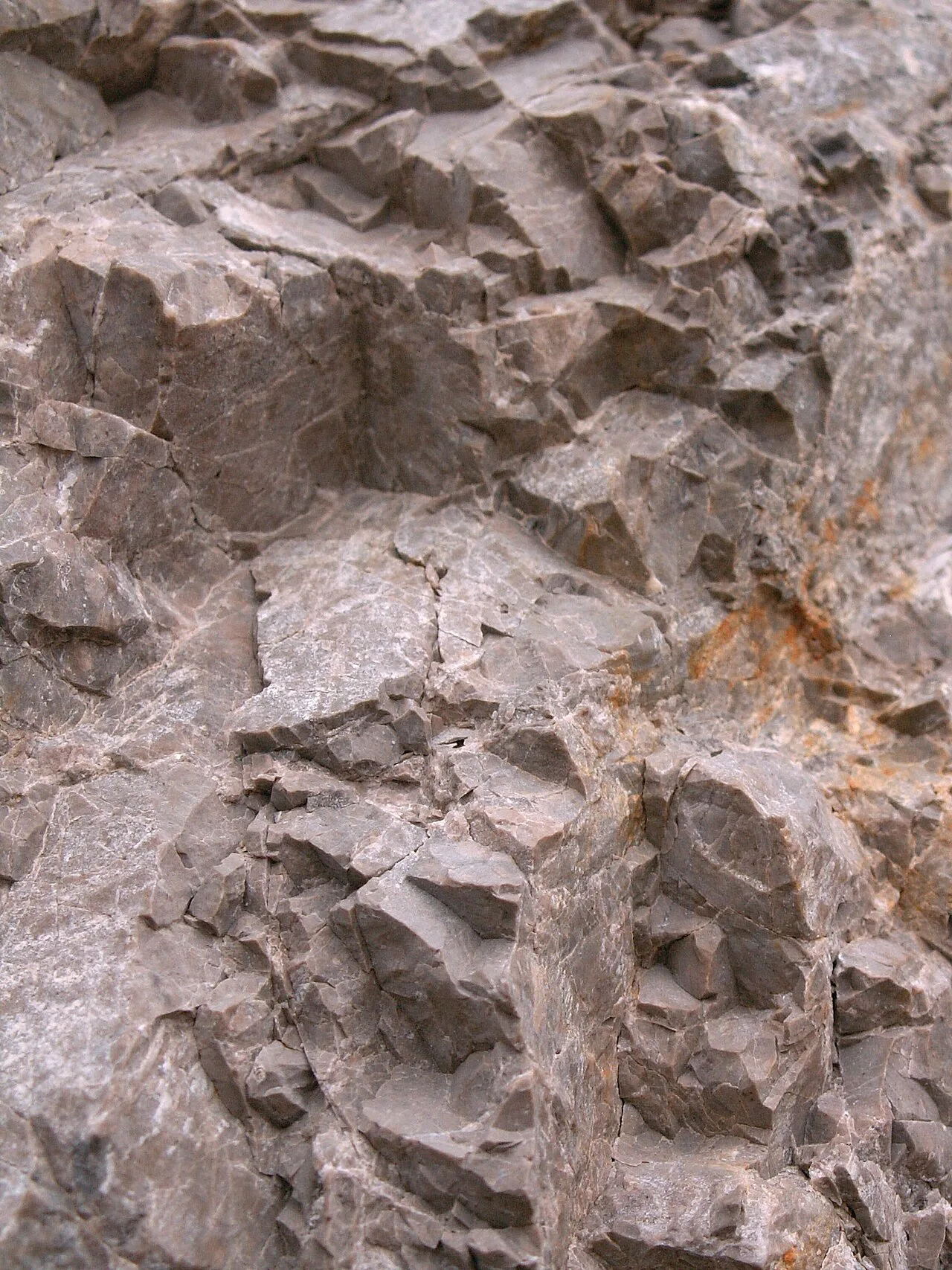
Dolomite is a natural sedimentary stone made mostly of the mineral dolomite, a calcium-magnesium carbonate. It is closely related to limestone and is frequently marketed as a "harder marble," because it often looks like marble but can be denser and more durable.
How Does Dolomite Form?
Dolomite forms when magnesium-rich water alters limestone, replacing some of the calcium with magnesium. This process — dolomitization — can happen long after the original limestone was deposited. The result is a stone with chemistry between limestone and magnesite.
What Does Dolomite Look Like?
Dolomite usually appears as white, grey, or cream stone, often with soft veining that resembles marble. Because it looks so much like marble, it is commonly used where people want a marble look with somewhat better durability and a lower price.
Where Is Dolomite Used?
Dolomite is used for countertops, bathroom vanities, wall cladding, and flooring. It occupies a middle ground: it is harder than classic marble for many applications, but it is still a carbonate stone with the same acid sensitivity.
Porosity and Sealing
Dolomite's porosity varies by slab. It is often denser than marble, but it still benefits from sealing where staining is a concern. Sealing reduces absorption but does not make the stone stain-proof.
Etching — Still a Factor
Despite being sold as a harder marble, dolomite remains a carbonate stone and can etch from acidic liquids, just like marble and limestone. Its improved hardness helps with scratching, but it does not remove the acid-sensitivity that carbonate stones share.
Advantages
- Marble-like appearance at a lower cost.
- Often harder and denser than classic marble.
- Wide availability in slabs.
- Attractive veining for a natural stone.
Limitations
- Can still etch from acids.
- Hardness varies and is not guaranteed by the label.
- Some slabs are porous and need sealing.
- Softer than granite and quartzite.
Common Misunderstandings
"Harder marble" is a marketing phrase, not a guarantee. Dolomite is its own stone, and its hardness varies by slab. More importantly, hardness and acid resistance are different things — a harder dolomite still etches from lemon juice or vinegar, so it should not be treated as an acid-resistant alternative to marble.